Frequently Asked Questions (FAQ) About Prefabricated Houses

In this article, I’ve compiled ‘Frequently Asked Questions (FAQ) About Prefabricated Houses’, which have become quite popular in recent years. Let’s get started…
If you want to design the tiny house of your dreams, take a look at the magnificent designs on our website.
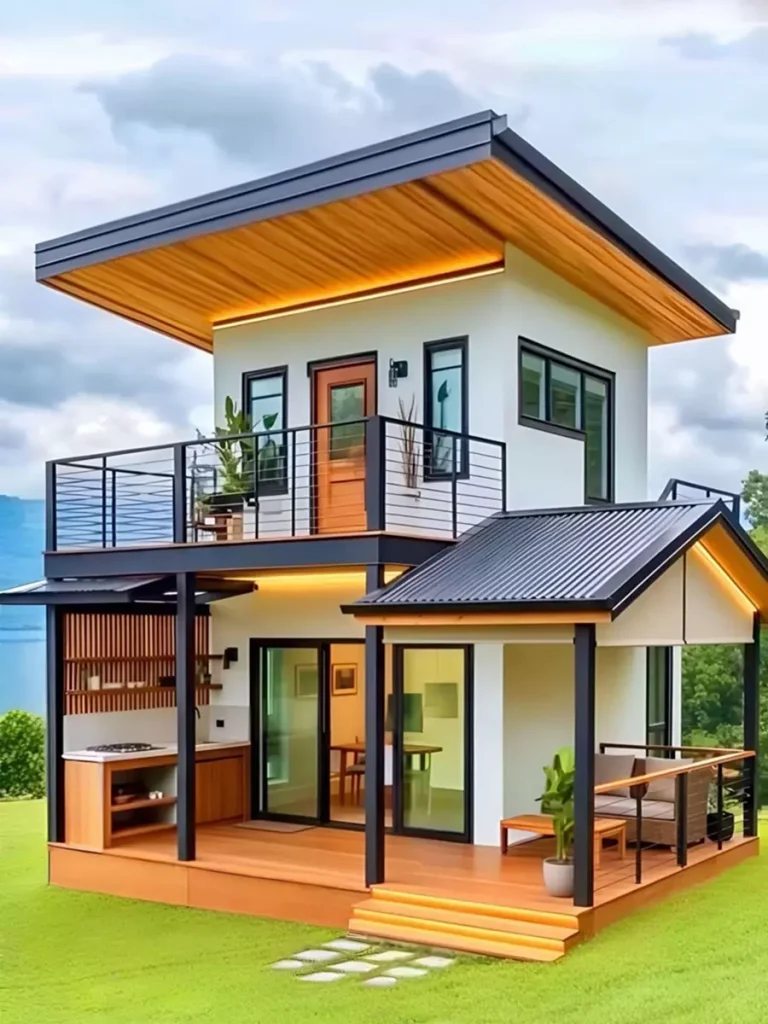
1. What is a prefabricated house?
A prefabricated house is a modern housing system built by quickly assembling pre-produced walls, roofs, and structural panels manufactured in a factory onto a plot of land. Compared to traditional buildings, they offer faster construction, lower cost, and flexible design advantages.
2. How long do prefabricated houses last?
With quality materials and proper maintenance, prefabricated houses can last between 40–70 years. Models with steel structural systems may last even longer.
3. Are prefabricated houses earthquake-resistant?
Yes. Thanks to their lightweight steel and flexible panel systems, they absorb seismic loads more effectively. With proper engineering and soil analysis, high earthquake resistance can be achieved.
4. Why do prefabricated house prices vary?
Key factors include:
• Square meter size
• Material quality
• Number of floors
• Interior equipment
• Transportation and installation
• Land condition
• Project customization
5. Is a building permit required for a prefabricated house?
Yes. Prefabricated houses are considered permanent structures, so zoning approval and a building permit from the municipality are required.
6. Are prefabricated houses cold in winter?
No. With proper insulation (EPS, rock wool, polyurethane, etc.), prefabricated houses stay warm in winter and cool in summer.
7. Do prefabricated houses get hot in summer?
With quality insulation, proper roofing, and orientation to the sun, comfortable indoor temperatures can be maintained during summer.
8. How long does it take to deliver a prefabricated house?
Depending on project size, production and installation are typically completed within 15–45 days.
9. Is land required for a prefabricated house?
Yes. A plot with zoning approval or a building permit is necessary.
10. Can prefabricated houses be relocated?
Some modular prefabricated houses can be dismantled and moved to another plot. However, this depends on the project and installation system.
11. Do prefabricated houses require maintenance?
Maintenance needs are minimal. Exterior paint renewal, roof inspection, and utility checks should be done regularly.
12. Can additional floors be added to prefabricated houses?
Depending on the structural design, prefabricated houses can be built as single or two-story units.
13. Are prefabricated houses eligible for loans?
Some banks offer prefabricated house loans. Loan conditions depend on the building permit and land title.
14. How are electricity and water systems installed in prefabricated houses?
Utilities are integrated into wall panels and installed during assembly.
15. Are prefabricated houses fire-resistant?
Fire resistance depends on the insulation material. Models with rock wool insulation provide high fire resistance.
16. Do prefabricated houses provide sound insulation?
Yes. Double-layer panels and quality insulation materials ensure satisfactory soundproofing.
17. Can prefabricated houses be used year-round?
Yes. With proper insulation and climate-appropriate design, they are suitable for all seasons.
18. What are the advantages of prefabricated houses?
• Fast delivery
• Affordable cost
• Earthquake resistance
• Energy efficiency
• Design flexibility
• Portability
• Low maintenance
19. Do prefabricated houses have disadvantages?
• Permit process required
• Land necessity
• Limited number of floors
• Poor insulation in low-quality production
20. What should be considered when building a prefabricated house?
• Company references
• Material quality
• Structural design
• Warranty period
• Insulation features
• Experience of installation team
• Compliance with permits
21. What is the difference between a prefabricated house and a container house?
A prefabricated house is built with panel systems, while a container house is created by converting steel box modules. Prefabricated houses offer greater design flexibility.
22. Are prefabricated houses a good investment?
Yes. Thanks to low cost, fast installation, and rental potential, they can be advantageous for investment.
23. Can prefabricated houses be customized?
Yes. Layout, façade, roof, interior decoration, and size can all be tailored to personal preferences.
24. Are prefabricated houses eco-friendly?
Yes. Factory production reduces material waste and increases energy efficiency, making them environmentally friendly housing systems.
Frequently Asked Questions (FAQ) About Prefabricated Houses

Click here for more information about tiny houses.
Don’t forget to check out other great ideas about Tiny House Universe and share them with your friends. Thanks!
»» Follow Tiny House Universe on social media to stay up to date with the latest posts ««
↓↓ Check Out Other Fascinating Tiny Stories ↓↓
- Juniper Slope Lodge Airbnb Retreat in Wilmington: The Most Exclusive Vacation Choice for 2026
- 4×7 Diameter Box Tiny House Design: Discover the Modern Minimalist Lifestyle
- Happy Goat Retreat in Texas: Container Home Living Amidst Nature
- Simple Tiny House 48m2 Minimalist Plan: Discover the Secrets of Minimalist Living
- The Pinnacle of Minimalist Living: Discover the 40 m² Two-Story Modern Tiny House!
↓↓↓ For More ↓↓↓
Contents
Keywords: Frequently Asked Questions (FAQ) About Prefabricated Houses, house designs, container house, cozy homes, minimalist living, small cabins, tiny house, cozy tiny house, tiny house projects, portable tiny house, affordable small homes, off-grid tiny house, tiny house plans.
Very good.
https://newtrendhouses.com/