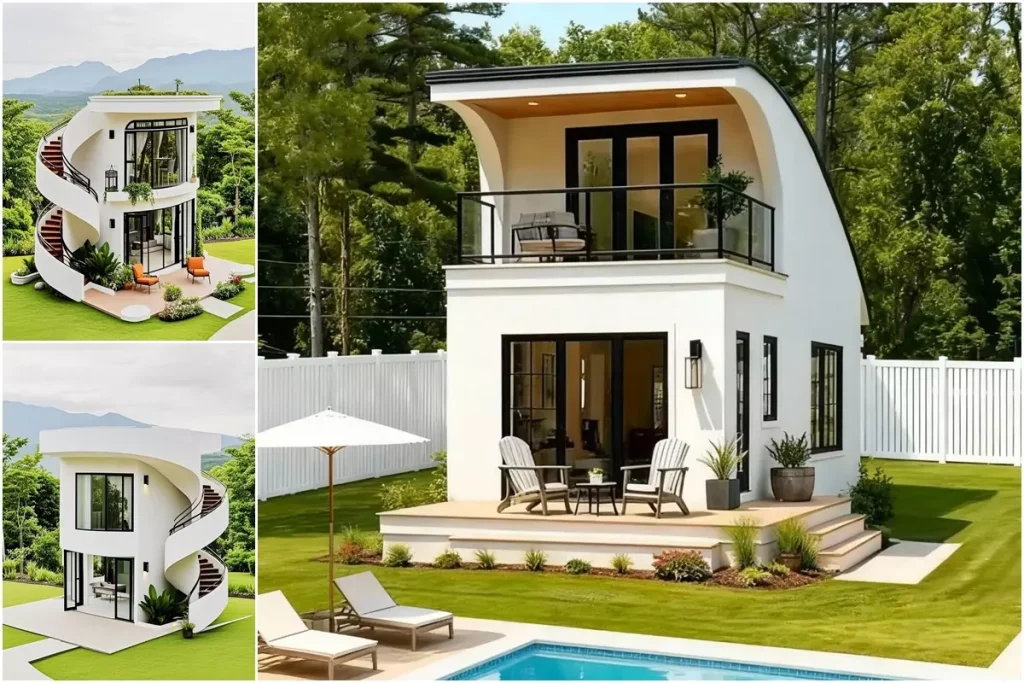

Stunning 5×6 Meter Tiny House Model: Seaside House Design Idea with Pool

In this article, we have examined the advantages and disadvantages of ‘Off Grid Tiny House Designs in Nature’ in detail.
Nowadays, tiny houses are becoming increasingly popular, and this popularity is not only about aesthetics but also about the search for sustainability and independence. Tiny homes have the potential to have a smaller carbon footprint, less energy consumption and lower costs.
Off-grid tiny house designs are a step ahead of this concept. These houses represent the idea of living without dependence on traditional infrastructure. Self-sufficient for basic needs such as electricity, water and waste management, these homes provide their residents with greater freedom and independence.
If you want to design your own tiny house, visit our website where we review amazing designs.

Living in an off-grid tiny house offers many advantages. First of all, it reduces energy costs. Electricity can be produced using renewable energy sources such as solar panels and wind turbines. They also use fewer resources than traditional homes and are often built with greener materials.

Technologies such as water collection systems and gray water recycling can minimize water consumption. Additionally, the amount of waste can be reduced with solutions such as compost toilets and recyclable waste management systems.

These houses are not only environmentally advantageous but also economically advantageous. They can be built at a lower cost than traditional homes and can save on energy bills. Additionally, long-term maintenance costs are generally lower.

But off-grid tiny homes are not without their challenges. In particular, factors such as the need to invest in infrastructure and technology and the possibility of encountering legal regulations in some regions should be taken into account. Additionally, this type of lifestyle may be unusual or challenging for some people.

As a result, off-grid tiny house designs in nature offer an attractive option for those who prefer a sustainable and independent lifestyle.

These houses may become even more popular in the future for those who want to use natural resources more efficiently, reduce energy costs and minimize their environmental footprint.

Click here for more information about container tiny houses.
Don’t forget to check out other great ideas about Tiny House Universe and share them with your friends. Thanks!
»» Follow Tiny House Universe on social media to stay up to date with the latest posts ««
↓↓ Check Out Other Fascinating Tiny Stories ↓↓
↓↓↓ For More ↓↓↓